UCL Standings Explained: Decoding the Group Stage Permutations for Knockout Glory
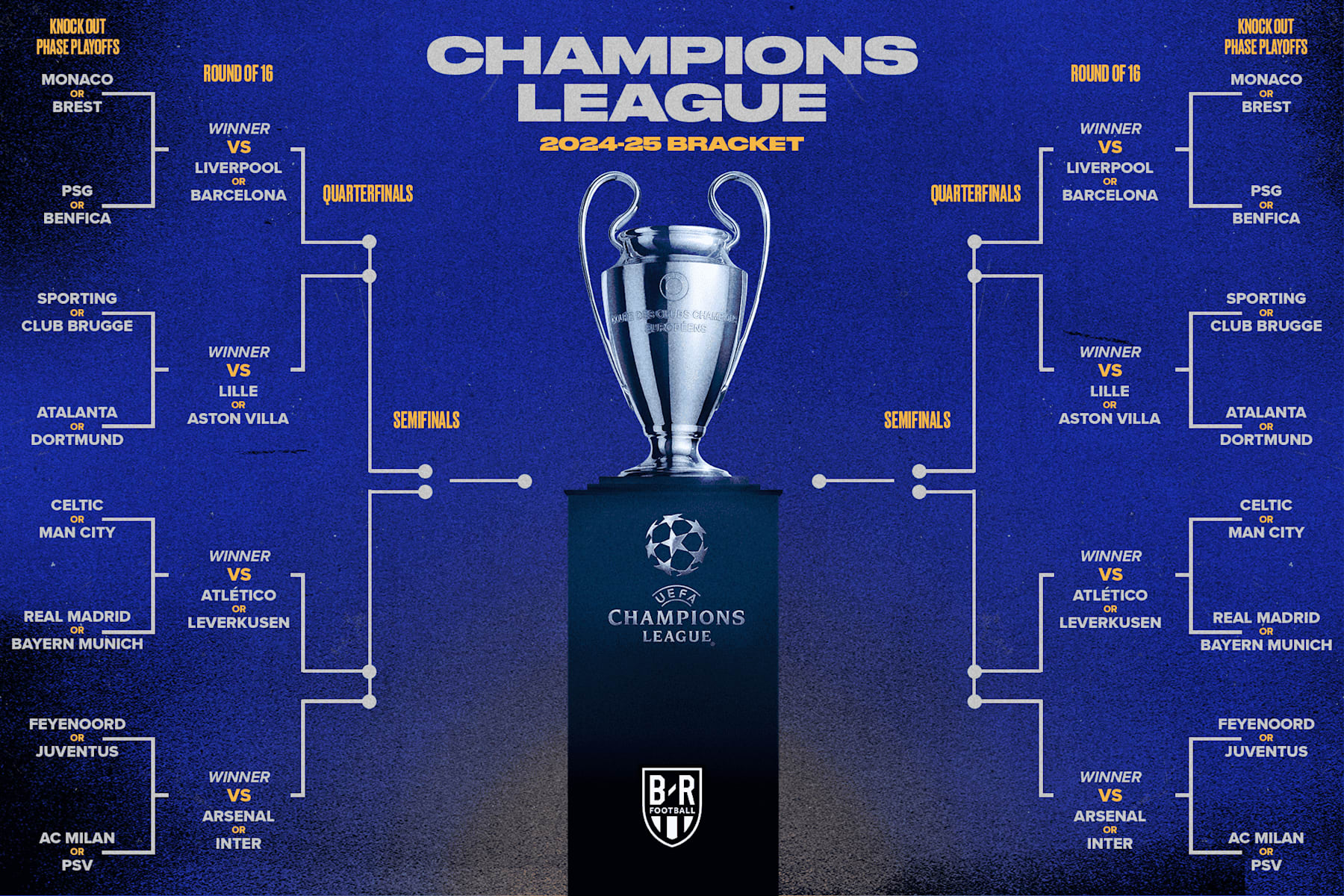
The UEFA Champions League group stage isn’t just a series of matches; it’s a high-stakes chess game where every pass, tackle, and goal can dramatically alter a team’s destiny. As the final matchdays approach, the tension becomes palpable, and the phrase ‘group stage permutations’ enters every football fan’s vocabulary. But what exactly does it mean, and how do teams navigate this complex web of possibilities to secure a spot in the coveted knockout rounds?
For ardent supporters and casual viewers alike, understanding the intricate rules and potential scenarios is key to fully appreciating the drama unfolding on Europe’s grandest stage. It’s a world where a single goal in one match can send ripples across an entire group, changing the fortunes of multiple clubs.
Forget simple win-or-lose scenarios; the Champions League group stage is a masterclass in complexity, governed by a precise set of rules that prioritize not just points, but head-to-head records, goal differences, and even disciplinary records. This comprehensive guide will demystify the UCL standings, breaking down every permutation and tie-breaking rule you need to know.
Unlocking the Basics: How the UCL Group Stage Works
At its core, the Champions League group stage involves 32 elite clubs, divided into eight groups of four. Over six matchdays, each team plays every other team in their group twice – once at home and once away. The objective is clear: accumulate as many points as possible.
The standard football points system applies: a win earns a team 3 points, a draw secures 1 point, and a loss yields 0 points. While this seems straightforward, the real challenge begins when teams finish level on points.
Only the top two teams from each group progress to the illustrious knockout stage, continuing their quest for the ultimate European club prize. The team finishing third in their group doesn’t leave Europe entirely; they drop down into the UEFA Europa League knockout stage, offering a second chance at continental glory. The fourth-placed team, unfortunately, sees their European journey end for the season.
Beyond the Points: Mastering the UEFA Tie-Breaking Rules
This is where the ‘permutations’ truly begin to twist and turn. When two or more teams are level on points at the end of the group stage, UEFA employs a strict hierarchy of tie-breaking criteria to determine their final positions. Understanding these rules is paramount, as they often decide who qualifies, who finishes first, and who drops into the Europa League.
The first and most crucial set of criteria focuses on the head-to-head records between the tied teams. UEFA essentially creates a ‘mini-league’ using only the results of the matches played between the clubs in question. This emphasizes direct competition and rewards teams for performing well against their immediate rivals.
- Higher number of points obtained in the group matches played among the teams in question. This is the first filter. If Team A beat Team B twice, and they’re tied on overall points, Team A would be ranked higher.
- Superior goal difference in the group matches played among the teams in question. If points are still level, the goal difference from just their head-to-head games is considered.
- Higher number of goals scored in the group matches played among the teams in question. If goal difference is also identical, the team that scored more goals in their direct encounters gets the nod.
- If only two teams are tied: Higher number of away goals scored in the group matches played among the teams in question. This specific rule applies only when exactly two teams are tied on points and all previous head-to-head criteria have failed to separate them.
- Superior goal difference in all group matches. This is often the most common tie-breaker after head-to-head.
- Higher number of goals scored in all group matches. If goal difference is equal, overall goals scored come into play.
- Higher number of away goals scored in all group matches. A less frequent but still vital tie-breaker.
- Higher number of wins in all group matches. Rewarding teams for securing victories.
- Higher number of away wins in all group matches. Another layer of detail.
- Superior disciplinary points (fair play) in all group matches. Yellow and red cards are tallied.
- Higher UEFA club coefficient. This is a ranking based on a club’s performance in UEFA competitions over the past five seasons.
These extensive rules ensure that every possible scenario has a clear resolution, leaving no room for ambiguity, even if it sometimes requires a calculator and a keen eye to follow!
Navigating the Labyrinth: Qualification Permutations Explained
The beauty of the UCL group stage lies in its unpredictability, especially in the final matchdays. Teams often find themselves in situations where their fate isn’t entirely in their own hands, leading to simultaneous drama across multiple venues. Let’s explore some common permutations.
The simplest scenario is the ‘win and you’re in’ situation. A team knows that if they secure three points in their final game, they will qualify, often irrespective of other results. This provides a clear objective and often leads to thrilling, attacking football.
Similarly, a ‘draw and you’re through’ scenario can arise if a team has a significant points advantage or a superior head-to-head record against their closest rivals. Here, a single point is enough to seal progression, potentially leading to more cautious tactics.
Then there are the scenarios where a team can qualify even with a loss. This typically happens if they have a comfortable lead over the third-placed team, and the result of another match goes in their favour – for instance, if the two teams below them draw, or one of them loses, securing the desired outcome for the team in question.
Finishing first in the group is highly advantageous. Group winners are usually drawn against group runners-up in the Round of 16, theoretically providing an easier draw. They also play the second leg of the knockout tie at home, which can be a significant psychological and strategic advantage. Therefore, even if qualification is secured, teams often fight fiercely for that top spot.
A team might need a win to secure first place, while a draw would leave them second. Conversely, they might only need a draw if their closest rival fails to win. These battles for group supremacy often go down to the wire, adding another layer of excitement.
For teams that miss out on the top two, the third-place finish offers a valuable consolation prize: a spot in the Europa League knockout playoffs. This can be crucial for a club’s finances, prestige, and continued European involvement. Teams might find themselves in a direct battle for third place, where a win or a draw against a rival could be the difference between continuing in Europe or being eliminated entirely.
Multi-Team Ties: When Three or More Teams Are Level
While two-team ties are relatively common, the most head-scratching permutations occur when three or even all four teams in a group finish level on points. This is where the head-to-head mini-league concept becomes absolutely vital.
If three teams are tied, UEFA first creates a mini-league consisting only of the results between those three teams. The head-to-head points, goal difference, and goals scored from those specific matches are applied. If this process separates one team, that team’s position is fixed. The remaining two (if still tied) then revert to the two-team head-to-head rules.
It’s a step-by-step elimination process. The mini-league effectively re-ranks the tied teams based on their direct performance against each other, before resorting to overall group statistics if a clear hierarchy cannot be established.
The Psychological Warfare: Strategy and Game Theory in the Final Matchdays
The knowledge of these permutations significantly influences tactical approaches. A team needing only a draw might adopt a more defensive posture, looking to frustrate their opponents and protect their single point. Conversely, a team that needs a win and relies on another result might play with reckless abandon, knowing their only hope is to score.
Managers must also consider the physical toll on their players. If a team has already secured qualification and first place, they might choose to rest key players for their domestic league commitments, potentially altering the dynamics of the final group game for other teams.
Conversely, a team that is already eliminated might still play with immense pride, or perhaps even a desire to spoil another team’s party. Their results can have a seismic impact on the group, even if their own fate is sealed.
The pressure on players and coaches in these crucial final group games is immense. The stakes are incredibly high, with millions of euros in prize money, club prestige, and fan expectations all hanging in the balance. Every decision, every substitution, every moment of brilliance or error is magnified.
Historically, the Champions League has provided countless examples of dramatic shifts in the final minutes of the final group games. Goals scored deep into injury time, unexpected upsets, and simultaneous results conspiring to produce incredible narratives are what make the competition so captivating.
Beyond the sporting glory, the financial implications of qualifying for the knockout stages are substantial. Prize money, increased broadcast revenue, and greater gate receipts all contribute to a club’s financial health, making every permutation a matter of economic as well as athletic consequence.
The group stage results can also have a significant psychological impact on a team’s domestic league form. A successful European campaign can build momentum and confidence, while an early exit can lead to disillusionment and added pressure.
For the fans, the final matchdays are an emotional rollercoaster. Following live scores, calculating scenarios on the fly, and celebrating or commiserating with every twist and turn is an integral part of the Champions League experience. It’s a shared journey of hope and despair.
Ultimately, the beauty of the UCL group stage permutations lies in its ability to create moments of pure, unadulterated drama. It’s a testament to the competitive nature of European football, where nothing is ever truly certain until the final whistle blows.
Conclusion: The Unpredictable Thrill of European Nights
The UEFA Champions League group stage is a masterclass in strategic football, where points on the board are just the beginning of the story. From the foundational points system to the intricate head-to-head tie-breakers and the myriad of qualification permutations, every element contributes to a spectacle of unparalleled excitement.
Understanding these rules doesn’t just make you a more informed viewer; it deepens your appreciation for the tactical battles, the high-stakes drama, and the sheer unpredictability that defines Europe’s premier club competition. As the final group stage fixtures loom, remember that in the Champions League, it’s rarely just about winning; it’s about navigating a complex web of possibilities to secure your place among Europe’s elite. May your favorite team defy the odds and conquer the permutations!
So, the next time you’re glued to the screen on a Champions League night, armed with your calculations and hopes, you’ll know exactly why every goal, every save, and every result in every game truly matters.

Real Madrid’s UCL Saga: A Rollercoaster of Triumphs and Tribulations

Champions League Schedule: Your Essential Matchday Companion
UCL Standings: The Electrifying Race for European Supremacy Intensifies!
About The Author
