Unlocking the Chaos: Live Champions League Table & Real-Time Qualification Scenarios
For the dedicated fan, watching the match is only half the story. The real narrative unfolds on the Live Champions League Table. This dynamic, ever-changing leaderboard is the pulse of the tournament, dictating who advances to the knockout stages, who drops to the Europa League, and who crashes out of Europe entirely. Understanding the mechanics behind these real-time scenarios is essential for truly grasping the drama of the competition.
The Anatomy of the Live Table
At first glance, a league table seems simple: three points for a win, one for a draw, and zero for a loss. However, during a live Champions League broadcast, the table is a living organism. As goals fly in across the continent, teams leapfrog one another in real-time. A team sitting comfortably in first place at 8:15 PM might find themselves eliminated by 9:30 PM without even conceding a goal in their own match, simply because a rival in another stadium found the back of the net.
This volatility is what makes the ‘As It Stands’ table so addictive. It strips away the pre-match permutations and presents the cold, hard reality of the moment. Broadcasters and apps update these standings instantly, but understanding the implications of those movements requires a deeper dive into UEFA’s rulebook.
Decoding Qualification Scenarios
The phrase ‘mathematically possible’ is the lifeblood of the group stages. As we approach Matchday 5 and 6, the scenarios become increasingly complex. It is rarely as simple as ‘win and you’re in.’ Often, a team’s fate rests in the hands of others. This is where the live table becomes a strategic map for fans and managers alike.
Managers on the touchline are often fed information about scores in other games. If a team needs a win to qualify but a draw is sufficient if the other group game ends in a tie, you might see a drastic tactical shift in the final ten minutes. They might switch from an all-out attack to parking the bus, purely based on the live scenario occurring in a different country.
The Crucial Tie-Breaker Rules
One of the most confusing aspects for casual viewers is the tie-breaker system. Unlike many domestic leagues that prioritize Goal Difference (GD) immediately, the Champions League has historically prioritized Head-to-Head (H2H) records among the teams tied on points. This adds a layer of complexity to the live table that standard score apps sometimes miss.
If Team A and Team B are tied on points in the live standings, the algorithm must instantly check their previous encounters. Did Team A beat Team B earlier in the season? If so, Team A sits higher, regardless of overall goal difference. This rule often creates ‘invisible’ shifts in the table where a goal scored in a completely unrelated match changes the H2H dynamic of a three-way tie.
The Role of Goal Difference
While Head-to-Head is the primary separator, Goal Difference remains vital, especially in the new league phase formats or complex multi-team ties. A thrashing in one game can provide a critical safety net. In real-time scenarios, a team losing 0-1 might still be safe, but conceding a second goal (0-2) could ruin their goal difference enough to drop them below a rival in the live standings.
The ‘Group of Death’ Dynamics
Every year, the draw produces a ‘Group of Death’—a quartet of high-quality teams where no result is guaranteed. In these scenarios, the live table is essentially a roulette wheel. All four teams can often enter the final matchday with a chance to qualify. These are the nights where the table flips upside down multiple times within a single half.
Imagine a scenario where Team A leads Team B, and Team C is drawing with Team D. A single goal by Team D could vault them from last place to second place instantly. This creates a pressure cooker environment where the crowd’s reaction to a stadium announcement often tells the players more than the scoreboard does.
The Europa League Safety Net
While the glory lies in the top spots, the battle for positions doesn’t end there. In traditional formats, finishing third meant a transfer to the UEFA Europa League. This ‘consolation prize’ is lucrative and offers a pathway to silverware. Consequently, the live table isn’t just about who goes up, but who survives.
We often see intense battles at the bottom of the group. A team knowing they cannot reach the Champions League Round of 16 might still pour everything forward in stoppage time to secure a draw, purely to snatch that Europa League spot from a rival. The live table tracks this desperation, highlighting the financial and sporting stakes of avoiding last place.
The Impact of the New Format (Swiss Model)
With UEFA shifting towards the ‘Swiss Model’ or League Phase, the concept of the live table has evolved from small 4-team groups to a massive, single-league table. This exponentially increases the chaos. Now, a goal scored in a match between two mid-table teams can affect the seeding of the top teams.
In this new era, every goal matters. The fight is not just for the top 8 (automatic qualification) but for the playoff spots (9th to 24th). The live table in this format is a massive data crunch, where goal difference will likely play a much larger role due to the sheer number of teams tied on points. Tracking this requires sophisticated real-time data visualization.
Technology and the Modern Fan
Gone are the days of checking teletext or waiting for the morning paper. Today, fans utilize second-screen experiences. Apps providing live probability percentages are becoming the norm. These tools calculate the percentage chance of a team qualifying based on the current live score and the remaining time.
For example, a team might have a 12% chance of qualifying at kickoff. If they score an early goal, that probability might spike to 65% instantly. If a rival concedes, it jumps to 80%. This data-driven approach allows fans to understand the magnitude of every event on the pitch.
VAR and the Live Standings
We cannot discuss live scenarios without mentioning the Video Assistant Referee (VAR). The emotional rollercoaster of a goal being scored, the table updating, and then the goal being disallowed is a modern phenomenon. A ‘phantom’ table shift occurs where fans believe they are through, only to be dragged back into the danger zone moments later.
This latency adds a psychological element to the live viewing experience. The ‘As It Stands’ graphic is now always viewed with a hint of skepticism until the VAR check is complete. It keeps the tension at a boiling point throughout the match.
Betting and Fantasy Implications
For sports bettors and fantasy football managers, the live Champions League table is a critical tool. In-play betting markets fluctuate wildly based on these live scenarios. Smart bettors don’t just watch the ball; they watch the permutations.
If a team only needs a draw to secure top spot and they are currently drawing 1-1 in the 80th minute, the likelihood of them attacking aggressively drops. They will likely settle. Recognizing this motivation via the live table can provide an edge in predicting the flow of the final minutes.
Conclusion: Embracing the Drama
The Champions League is the pinnacle of club football, not just because of the quality of players, but because of the narrative stakes. The Live Champions League Table is the storyboard upon which this drama is written. It turns simultaneous matches into a cohesive, heart-stopping story.
Whether you are a die-hard ultra, a casual viewer, or a data enthusiast, keeping an eye on the real-time group scenarios transforms the viewing experience. It reminds us that in European football, nothing is decided until the final whistle blows. So, the next time the Champions League music plays, don’t just watch the game—watch the table.


Anatoliy Trubin’s Masterclass: How Benfica’s Goalkeeper Became the Undisputed Star
UCL Scores and Stats: Dive Deep into Every Champions League Match
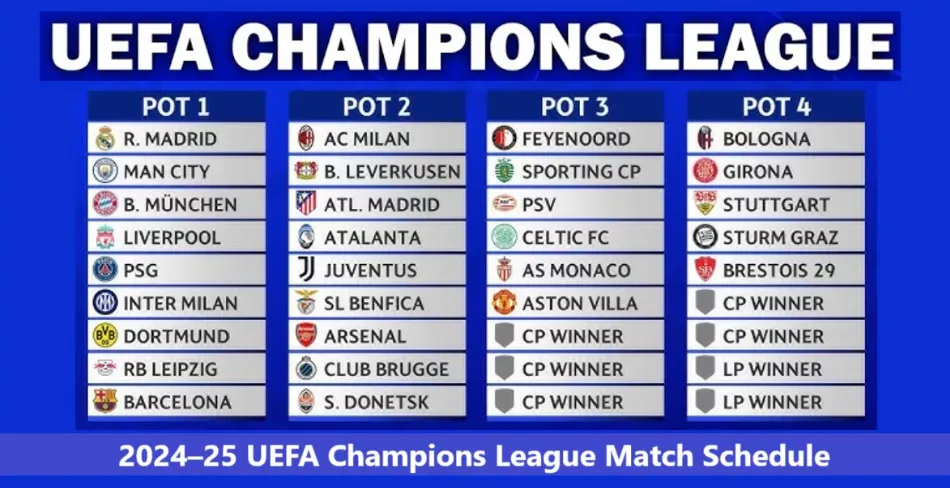
Champions League Schedule: Your Ultimate Guide to the 2025-2026 Season
About The Author
