La Champions Uncovered: The Ultimate Fan’s Handbook to European Glory
It starts with a crescendo of strings, a choir of voices rising in unison, and a simple, trilingual phrase that sends shivers down the spine of every football fan on the planet: "Die Meister! Die Besten! Les grandes équipes! The Champions!" If you aren’t humming the tune right now, you haven’t truly experienced the magic of Tuesday and Wednesday nights in Europe.
The UEFA Champions League, affectionately known as "La Champions" in many corners of the globe, is not merely a tournament; it is the absolute zenith of club football. It is the theater where legends are forged, where dynasties are built, and where the impossible becomes reality in the span of ninety minutes. For the uninitiated, it can be overwhelming; for the veteran, it is an obsession.
Welcome to the ultimate fan’s handbook. Whether you are looking to understand the rich history, grasp the complex new format, or simply want to relive the glory of the greatest nights in football history, this guide is your ticket to the VIP box of European soccer knowledge.
The Prestige: Why ‘La Champions’ Stands Alone
While the FIFA World Cup carries the weight of national pride, the Champions League offers something arguably superior: the highest concentration of talent in a single competition. The best players from Brazil, France, Argentina, and beyond flock to Europe’s elite clubs, creating super-teams that national squads simply cannot replicate due to training constraints.
Winning "Big Ears"—the nickname given to the distinctively handled trophy—is the crowning achievement for any club. It validates a season, justifies billions in transfer fees, and immortality for the manager. It is a high-stakes environment where a single mistake can haunt a player for a lifetime, and a single moment of brilliance can etch their name into eternity.
The competition is fierce. Unlike domestic leagues where one or two teams might dominate, the Champions League pits the champions of England, Spain, Italy, Germany, and France against one another. It is a clash of cultures, tactical philosophies, and sheer willpower.
A Legacy of Giants: The Kings of Europe
To understand the present, one must respect the past. The history of the tournament is dominated by royalty. Real Madrid stands as the undisputed king of the competition. Their relationship with the European Cup is almost mystical; when the Champions League anthem plays, Los Blancos transform into an unstoppable force, regardless of their domestic form.
The Underdogs and Dark Horses
However, the beauty of La Champions lies in its unpredictability. We have seen the likes of FC Porto, under a young José Mourinho, defy the odds. We have watched Ajax dazzle the world with youth, and Chelsea drag themselves to victory through sheer defensive grit. Every season brings a new narrative, a new potential Cinderella story waiting to unfold.
Decoding the New Format: The Swiss Model Explained
For decades, the Group Stage was a staple: 32 teams, 8 groups, home and away. But football never stands still. The recent shift to the "Swiss Model" or the League Phase represents the biggest shake-up in the competition’s modern history. This is crucial for every fan to understand.
Gone are the traditional groups. Instead, we now have a single league table containing all participating teams. Under this new format, teams play eight matches in the initial phase—four at home and four away—against eight different opponents. This ensures that big teams clash earlier in the tournament, eliminating the "dead rubber" matches that often plagued the old group stage.
The stakes are higher immediately. The top eight teams in the league qualify automatically for the Round of 16. Teams finishing 9th to 24th must enter a two-legged playoff to secure their spot. This means every goal difference, every point, and every match matters right until the final whistle of the league phase.
Nights of Miracles: Iconic Comebacks
If you want to sell the Champions League to a skeptic, you simply show them the replays of the comebacks. The tournament has a unique propensity for the dramatic. The most famous of all remains Istanbul, 2005. AC Milan led Liverpool 3-0 at halftime. The game was effectively over. Yet, in six minutes of madness, Liverpool scored three times and went on to win on penalties.
Then there was La Remontada in 2017. Barcelona lost 4-0 to PSG in the first leg. In the return leg at Camp Nou, they needed a miracle. In the dying seconds of the game, Sergi Roberto stretched to volley home the winner in a 6-1 victory (6-5 on aggregate), causing seismic vibrations in the city of Barcelona.
More recently, Real Madrid’s 2022 run defied logic. Against PSG, Chelsea, and Manchester City, they looked dead and buried, only to resurrect themselves in the final minutes of each tie. These moments are not just matches; they are "I was there" cultural events.
The Fan Experience: How to Consume the UCL
Being a fan of the Champions League is a lifestyle. It requires navigating mid-week fixtures that often clash with work or school schedules, depending on your time zone. But the sacrifice is part of the ritual.
Fantasy Football and Betting
Engagement goes beyond watching. The official UEFA Champions League Fantasy Football game attracts millions of managers. Analyzing player form, rotation risks, and fixture difficulty adds a layer of depth to the viewing experience. Similarly, the betting markets are vibrant, with fans predicting everything from the first goalscorer to the number of corners.
The Traveling Supporter
For the lucky few, European away days are the holy grail. Traveling to iconic stadiums like the Santiago Bernabéu, San Siro, Anfield, or the Allianz Arena offers a taste of local culture mixed with the hostility and passion of European ultra scenes. The atmosphere in a Champions League knockout game is electric, a wall of noise that television cameras struggle to fully capture.
Tactical Evolution: The Laboratory of Football
The Champions League is where tactical trends are set. It was here that the world fell in love with Arrigo Sacchi’s pressing, Pep Guardiola’s possession play, and Jurgen Klopp’s Gegenpressing. Because the quality of opposition is so high, managers are forced to innovate.
In recent years, we have seen the rise of the hybrid defender, the false nine, and the box midfield. Watching La Champions is essentially getting a preview of how football will be played at lower levels in five years. It is a masterclass in strategy, where substitutions and formation tweaks can swing the momentum of a tie instantly.
Conclusion: The Road to the Final
As the season progresses, the herd thins. The pretenders fall away, leaving only the elite to battle in the spring. The road to the final is long and arduous, demanding physical excellence and mental fortitude.
The final itself is a global spectacle, rivaled only by the Super Bowl and the World Cup Final. It is a celebration of the beautiful game in its purest, most potent form.

Benfica’s UCL Dreams: Can the Eagles Soar to Surprise Glory?

Real Madrid’s Champions League Gauntlet: Full Schedule, Key Clashes & Path to Glory
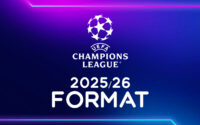
Future Kings of Europe: An Early Look at the Champions League 2026 Playoffs
About The Author
