Champions League Table: Live Updates, Analysis, and Knockout Projections
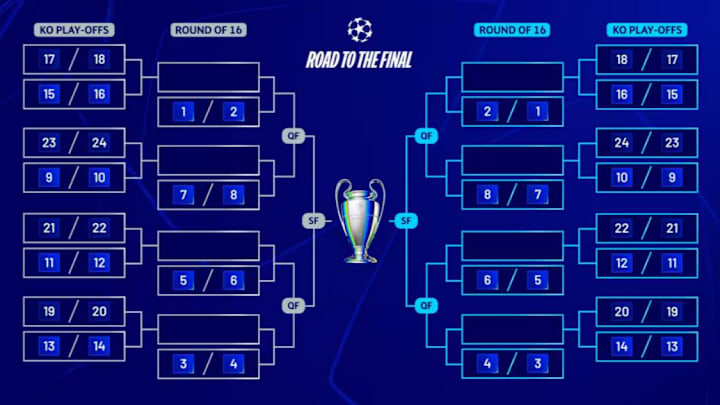
For fans, bettors, and pundits alike, understanding the Champions League table is no longer just about checking who is leading Group A or B. It is now a complex, dynamic ecosystem where a goal scored in Milan can drastically alter the fate of a team playing in London. The margin for error has never been thinner, and the rewards for consistency have never been higher.
In this comprehensive guide, we will dissect the current state of the League Phase standings. We will move beyond the raw numbers to provide deep analysis on live updates, project who will secure the coveted automatic qualification spots, and evaluate the fierce battle for survival in the playoff zone. Whether you are tracking your team’s path to glory or analyzing the odds, this is your ultimate roadmap.
Decoding the New League Phase Format
Before diving into the specific projections, it is crucial to master the mechanics of the new format. The ‘Swiss Model’ has replaced the group stage, creating a single league table containing all 36 participating clubs. Under this system, every team plays eight matches—four at home and four away—against eight different opponents.
This structural change means that the Champions League table is more volatile than ever. In the past, a team could qualify after four games and rotate their squad. Now, goal difference applies across the entire table, meaning a heavy defeat can send a team tumbling down the rankings, while a comprehensive win can catapult them into the elite tier.
The magic number is no longer just about points; it is about positioning. The table is split into three critical zones: the automatic qualifiers (1st-8th), the playoff contenders (9th-24th), and the eliminated clubs (25th-36th). Understanding these stratifications is key to interpreting the live updates.
The Race for the Golden Top 8
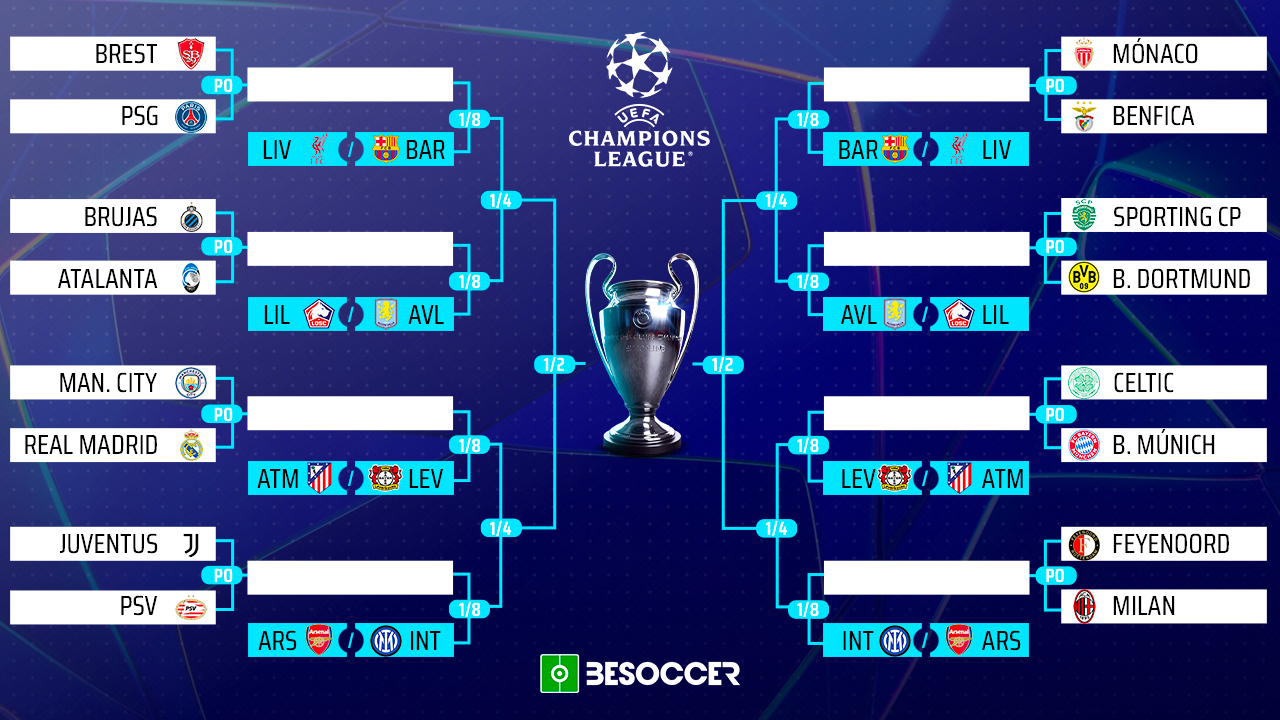
Finishing in the top eight is the new ‘winning the group.’ Teams that secure these positions bypass the treacherous knockout playoff round and advance directly to the Round of 16. This is a massive strategic advantage, offering rest during a congested mid-season calendar and guaranteeing a seeded position in the draw.
Current Projections: The usual heavyweights—Manchester City, Real Madrid, and Bayern Munich—are naturally the favorites to occupy these slots. However, the new format rewards teams with favorable strength-of-schedule. A surprise package with a run of winnable games can easily dislodge a giant that happens to face three or four elite rivals.
Statistically, data models suggest that 15 to 16 points should be sufficient to secure a top-8 finish. This means teams need to win five of their eight games to feel safe. Any team dropping points at home in this phase is immediately putting their automatic qualification hopes in jeopardy.
The Playoff Purgatory: Positions 9 through 24
The most intense drama in the Champions League standings is found in the middle of the pack. Teams finishing between 9th and 24th must play a two-legged knockout tie to reach the Round of 16. While this keeps the dream alive, it adds two high-intensity matches to an already grueling schedule.
Key Battlegrounds: This zone is typically where we see strong teams who stumbled early, such as a struggling PSG or a transition-phase Juventus, fighting against overachieving underdogs. For the ‘smaller’ clubs, finishing 24th is a massive victory; for the giants, falling into this zone is a cause for crisis.
The Danger Zone: Immediate Elimination
This creates ‘six-pointer’ matches between lower-ranked sides. A match between two teams sitting 28th and 30th on Matchday 7 becomes a cup final, as the winner keeps their hopes of sneaking into 24th place alive. This ensures that dead-rubber matches are virtually non-existent until the very final whistle of Matchday 8.
Live Updates: Analyzing Form and Momentum
When viewing live updates of the table, context is everything. Because teams play different opponents, the table is often skewed until the final rounds. A team sitting in 12th might actually be in a stronger position than a team in 6th if the former has already played their toughest opponents while the latter has a brutal run-in remaining.
Injury Impact: The depth of a squad is tested more in this format. Injuries to key players during the intense winter period can cause a dramatic slide down the table. We are seeing that teams with deep benches, like Arsenal and Inter Milan, are better equipped to handle the relentless consistency required to stay in the top tier.
The Rise of the Underdogs
One of the most refreshing aspects of the current standings is the presence of surprise packages. Teams like Aston Villa, Brest, or Bayer Leverkusen have shown that organized pressing and tactical discipline can disrupt the hierarchy. These teams are not just making up the numbers; they are actively taking points off the favorites, complicating the projections for the top 8.
Projections and Statistical Probabilities
Advanced metrics and supercomputer projections are now essential for predicting the final table. Analysts look at ‘Expected Points’ (xPts) and ‘Strength of Schedule’ to forecast the final 36-team order. The data suggests that goal difference will be the ultimate tie-breaker for at least four or five critical positions.
The Magic Number for Survival: To scrape into the 24th spot, projections estimate that 9 or 10 points will be the cutoff. This means three wins and a draw could be enough to extend a European campaign. For teams currently sitting on 3 or 4 points after four games, the margin for error is zero.
Who Has the Hardest Run-In?
When projecting the final standings, always look at the remaining fixtures. A team currently in the top 8 with away games at the Bernabéu and the Etihad is likely to drop points. Conversely, a team in 15th with home games against the bottom-tier seeds is a prime candidate to surge up the table in the final weeks.
Tie-Breakers: The Fine Margins
In a single table of 36 teams, ties on points are inevitable. The tie-breaking criteria are vital knowledge for any serious fan. The primary differentiator is goal difference, followed by goals scored, and then away goals scored. Head-to-head results are less relevant since most tied teams will not have played each other.
This encourages attacking football. A 1-0 win is good, but a 4-0 win is significantly better because it boosts the goal difference that could decide a top-8 finish. We are likely to see teams pushing for late goals even when the match is won, purely to improve their standing in the league table.
Strategic Implications for Betting and Fantasy
For fantasy football managers and sports bettors, the new table format requires a change in strategy. Rotation risks increase for teams who have mathematically secured a top-8 spot by Matchday 7. However, teams fighting for seeding in the playoff round (9th-16th get seeded) will have incentive to play their best XIs until the end.
Betting on ‘To Qualify for Top 8’ offers intriguing value, particularly on heavyweights who suffer an early upset. The market often overreacts to one bad result, ignoring the statistical likelihood of a team like Liverpool or Barcelona recovering over the course of eight games.
Conclusion: The Road to the Final
The new Champions League table has injected chaos, excitement, and uncertainty into the world’s premier club competition. Every goal echoes across the continent, shifting positions and altering destinies in real-time. From the elite battling for the top 8 privilege to the underdogs scrapping for the 24th spot, every single match matters.
As we progress through the winter months, keep a close eye on the goal difference column and the strength of the remaining schedules. The table is not just a list of teams; it is a narrative of survival and dominance. Stay tuned for live updates, because in this new era of the Champions League, nothing is decided until the final whistle blows.
Champions League Playoffs 2026: Your Ultimate Guide to the Knockout Stage Showdown
Decoding the UCL Table: Why Every Point is a Matter of Life and Death

Eagles Soar High? A Realistic Look at Benfica’s Champions League Dreams
About The Author
