UCL Standings Explained: Unlock the Secrets Behind Every Team’s Position
The UEFA Champions League, European club football’s most prestigious competition, isn’t just about spectacular goals and dramatic finishes. Beneath the surface of every thrilling match lies a complex tapestry of points, goal differences, and intricate tie-breaking rules that ultimately decide a team’s destiny. Understanding the UCL standings is crucial for any true football fan, as it reveals the strategic depth and high stakes involved in every single group stage encounter.
Have you ever wondered why one team progresses with fewer points than another, or how a single late goal can completely alter a club’s European trajectory? This comprehensive guide will pull back the curtain, demystifying the mechanics behind the Champions League group standings and providing an in-depth analysis of what every team’s position truly means.
From the initial kick-off to the final whistle of the group stage, every pass, tackle, and shot on goal contributes to a team’s standing. It’s a relentless battle where consistency, tactical prowess, and even a touch of luck can be the difference between glory and disappointment. Let’s break down the foundational elements that govern these pivotal tables.
The Basic Points System: Your Foundation for Progress
At its core, the Champions League group stage operates on a simple points system, familiar to most football enthusiasts. Each of the 32 participating teams is drawn into one of eight groups (A-H), playing every other team in their group twice – once at home and once away. This means a total of six matches per team.
The allocation of points is straightforward: a win earns a team 3 points, a draw secures 1 point, and a loss yields 0 points. The objective is clear: accumulate as many points as possible over these six fixtures.
However, simply accumulating points is often not enough. In a competition where margins are razor-thin and quality is abundant, it’s incredibly common for teams to finish level on points. This is where the intricacies of the tie-breaking rules come into play, often making the difference between advancing to the coveted knockout rounds or facing an early exit.
The Primary Objective: Top Two Finish
The ultimate goal for any team entering the Champions League group stage is to finish in the top two positions within their group. These two spots guarantee a place in the highly anticipated knockout stages, where the real drama of the competition truly unfolds. Finishing first brings significant advantages, while second place still offers a path forward, albeit a potentially tougher one.
Deciphering Tie-Breakers: When Points Aren’t Enough
This is where the ‘explanation’ truly begins. When two or more teams finish level on points in their group, UEFA employs a strict set of criteria to determine their final ranking. These rules are applied sequentially, meaning you move to the next criterion only if the previous one fails to separate the teams.
- 1. Head-to-head points: The first and most critical tie-breaker is the number of points obtained in the group matches played *only* between the teams in question. If Team A and Team B are tied on overall points, their results against each other are examined first.
- 2. Head-to-head goal difference: If head-to-head points are equal, the goal difference from the group matches *only* between the teams in question is used. (Goals scored minus goals conceded in those specific matches).
- 3. Head-to-head goals scored: If still level, the number of goals scored in the group matches *only* between the teams in question is considered.
- 4. Head-to-head away goals scored: If the teams are still inseparable, the number of away goals scored in the group matches *only* between the teams in question is the next criterion. This is a powerful tie-breaker that often decides fates.
- 5. Overall group goal difference: If all head-to-head criteria fail to separate the teams (which is rare for just two teams but can happen with three or more), then the overall goal difference from *all* group matches is applied.
- 6. Overall group goals scored: Should goal difference still be identical, the total number of goals scored in *all* group matches by each team is used.
- 7. Overall group away goals scored: The total number of away goals scored in *all* group matches by each team.
- 8. Overall group wins: The total number of wins in *all* group matches.
- 9. Overall group away wins: The total number of away wins in *all* group matches.
- 10. Disciplinary points (Fair Play): If teams are still tied, the team with the lower number of disciplinary points (yellow card = 1 point, red card = 3 points for direct, 3 points for two yellows) in *all* group matches is ranked higher. This is a testament to fair play being valued.
- 11. UEFA club coefficient: As a last resort, if all else fails, the team with the higher UEFA club coefficient (a ranking based on past European performance) is placed higher. This is exceedingly rare but provides a definitive solution.
It’s important to note that when three or more teams are tied on points, the head-to-head criteria are applied first to the mini-league formed by those specific teams. Once one team is separated, the process restarts for the remaining tied teams.
The Golden Ticket: Qualifying for the Knockout Rounds
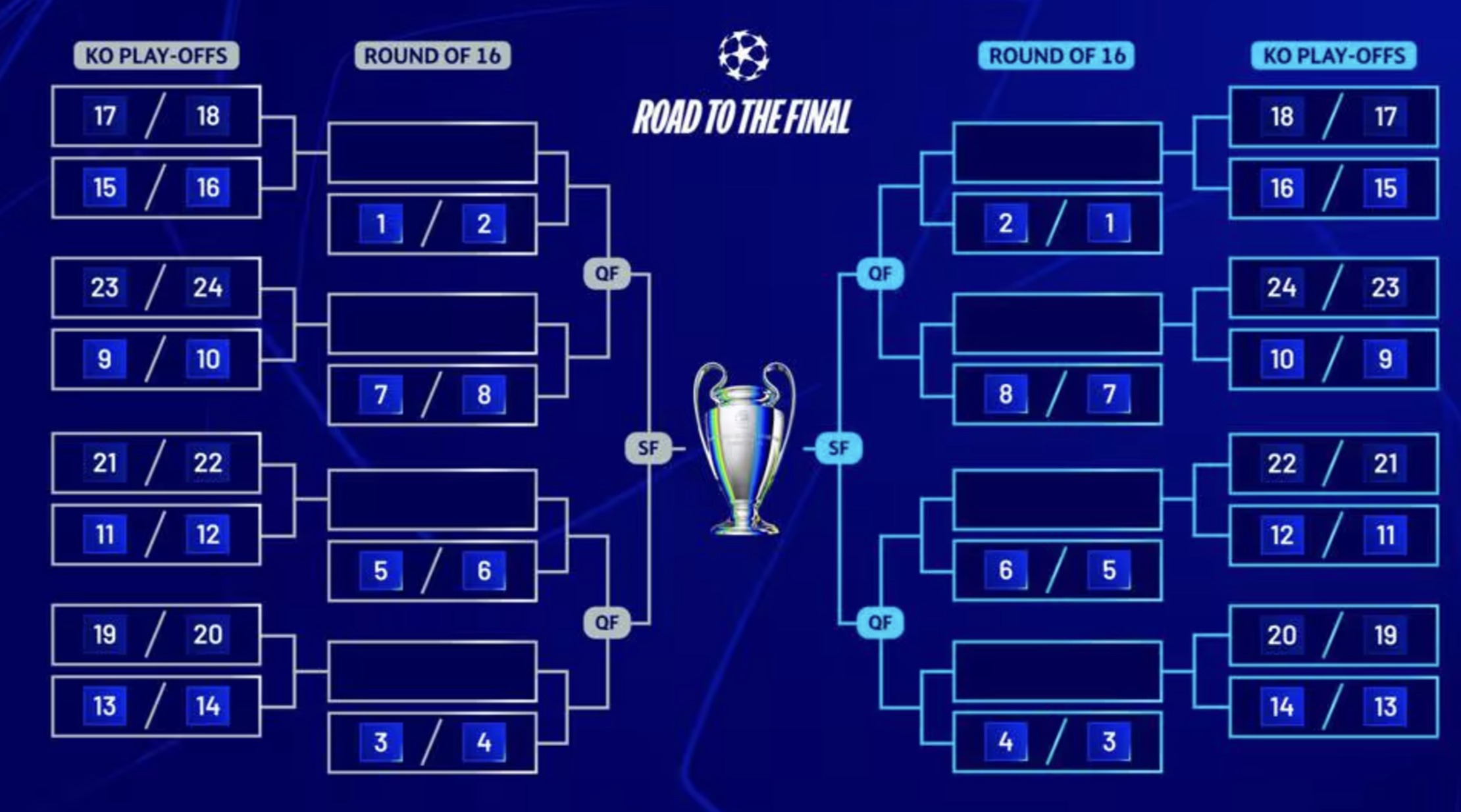
The top two teams from each group earn their coveted spot in the Round of 16. This is where the competition truly intensifies, moving from a league format to direct elimination.
First Place Advantage: Seeding and Draw Benefits
Finishing as group winners is a significant achievement and offers tangible benefits. Group winners are ‘seeded’ for the Round of 16 draw, meaning they will be drawn against a group runner-up. Crucially, they also play the second leg of their Round of 16 tie at home. This home advantage in the decisive leg can be a massive psychological and tactical boost, often proving instrumental in close encounters.
Second Place Challenge: Unseeded and Away Leg
Group runners-up, while still progressing, face a tougher path. They are ‘unseeded’ and will be drawn against a group winner. Furthermore, they play their second leg away from home. This means they often face a stronger opponent and must overcome the hurdle of securing a result on foreign soil in the decisive match.
The Europa League Consolation: Third Place Matters
Even for teams that don’t make the top two, finishing third in their Champions League group isn’t the end of their European journey. These teams are granted a lifeline, dropping down into the UEFA Europa League knockout round play-offs.
This ‘consolation prize’ is far from insignificant. It offers a chance to continue competing for European silverware, provides additional financial revenue, and allows clubs to maintain their competitive edge on a continental stage. For many clubs, particularly those from smaller leagues or those rebuilding, a deep run in the Europa League can be a tremendous boost to their reputation and finances.
Why Every Goal, Every Point Counts: Strategic Implications
The intricate tie-breaking rules mean that every single goal scored or conceded, every draw secured, and every victory fought for can have monumental consequences. Managers and players are acutely aware of this.
Consider a scenario where two teams are level on points. A single goal difference, perhaps from a late strike in an earlier match, could be the deciding factor. This knowledge impacts tactical decisions: do you push for another goal even when 3-0 up, or do you prioritize defensive solidity to protect a crucial clean sheet?
Impact on Squad Rotation and Player Management
The importance of goal difference and head-to-head records can also influence squad rotation decisions. A manager might opt to play a stronger lineup in a seemingly ‘dead rubber’ game if a better result could improve their overall goal difference, potentially securing a more favorable draw or even group leadership.
Momentum and Confidence
Finishing strong in the group stage, perhaps by topping the group or securing qualification early, builds crucial momentum and confidence heading into the demanding knockout rounds. This psychological edge can be just as valuable as any tactical advantage.
Beyond the Pitch: Financial and Prestige Rewards
The stakes in the Champions League extend far beyond sporting glory. A team’s position in the standings has significant financial implications.
Prize Money and Broadcasting Rights
Progressing through the group stage, especially as group winners, unlocks substantial prize money from UEFA. Furthermore, better performances and deeper runs increase a club’s share of market pool revenue from broadcasting rights, which can be worth tens of millions of euros.
Club Coefficients and Attracting Talent
Consistent strong performances in the Champions League improve a club’s UEFA coefficient, which in turn can lead to better seeding in future European competitions. This cycle of success helps clubs attract top-tier talent, further strengthening their squad and enhancing their global brand.
The prestige of competing and excelling in the Champions League is immeasurable. It elevates a club’s status, inspires its fanbase, and cements its place among Europe’s elite. Every point, every position, contributes to this grand narrative.
In Conclusion: The Unfolding Drama of the UCL Standings
The UEFA Champions League standings are far more than just a list of teams and points. They are a dynamic, ever-changing narrative reflecting strategic battles, individual brilliance, and the relentless pursuit of European glory. Understanding the nuances of the points system, the critical tie-breaking rules, and the implications of each finishing position enriches the viewing experience for every fan.
From the dramatic swings of head-to-head records to the last-gasp goals that alter goal difference, every detail matters. So, the next time you check the UCL standings, remember the layers of strategy and significance behind every number. It’s a testament to the competition’s enduring allure and its status as the pinnacle of club football.
Stay tuned, because in the Champions League, nothing is ever decided until the final whistle, and every team’s position is a story waiting to be told.

The Reign of Real Madrid: Are They Still the Kings of the Champions League?

Is Real Madrid Out of the Champions League? Unpacking Their Current Status and Path to Glory

Benfica vs. Real Madrid: A Clash of Titans for European Glory
About The Author
