Real Madrid’s Unrivalled Reign: The Path to European Supremacy in the Champions League
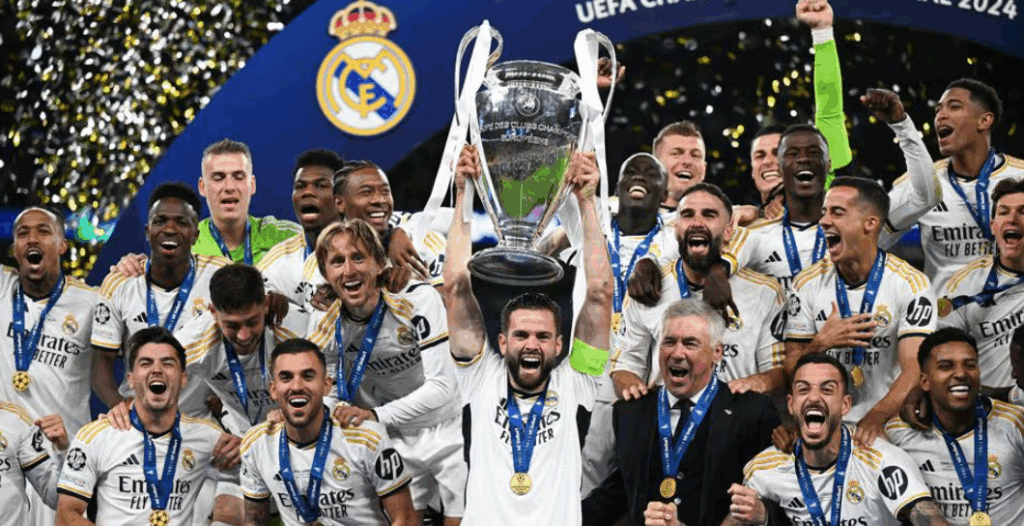
In the annals of football history, certain clubs etch their names in gold, but only one truly reigns supreme when it comes to the UEFA Champions League: Real Madrid CF. Their relationship with Europe’s most prestigious club competition is not merely one of success, but of an enduring, almost mythical, dominance. It’s a tale woven with legendary players, iconic moments, and an unyielding will to win that transcends generations.
For decades, the Santiago Bernabéu has been the stage for footballing theatre, a coliseum where dreams are forged and rivalries ignite. But it is in the Champions League, or the European Cup as it was once known, that Real Madrid truly comes alive, transforming challenges into triumphs and proving time and again why they are considered the ultimate European powerhouse.
This comprehensive article delves deep into Real Madrid’s extraordinary journey, charting their path from the competition’s inception to their unparalleled modern-day supremacy. We will uncover the secrets behind their consistent success, the pivotal figures who shaped their destiny, and the indelible mark they’ve left on the beautiful game.
The Genesis of a Dynasty: Forging the Early European Crown
The story of Real Madrid’s European dominance begins at the very dawn of the competition. When the European Cup was conceived in the mid-1950s, it provided the perfect platform for a club with grand ambitions and a visionary president, Santiago Bernabéu, to establish itself on the continental stage.
The Di Stéfano Era and the First Five
Under the guidance of Bernabéu and the sheer brilliance of Argentine maestro Alfredo Di Stéfano, Real Madrid embarked on a run that remains unmatched. From 1956 to 1960, they lifted the trophy five times consecutively, a feat of sustained excellence that stunned the footballing world.
Di Stéfano, alongside iconic figures like Francisco Gento and Ferenc Puskás, formed an attacking trio that terrorized defenses across Europe. Their fluid play, technical prowess, and relentless goal-scoring set the benchmark for what European football could be.
This foundational era not only filled the trophy cabinet but also ingrained a winning mentality and an expectation of European success into the very fabric of the club. It was during these years that the legend of Real Madrid as the ‘Kings of Europe’ was born.
A Period of Transition and Resurgence: Navigating the Modern Era
Following the golden age of Di Stéfano, Real Madrid experienced periods of ebb and flow. While domestic success remained a hallmark, European glory proved more elusive, leading to a prolonged wait for the most coveted trophy.
The Quinta del Buitre and the Long Wait
The late 1980s saw the emergence of a talented generation known as ‘La Quinta del Buitre‘ – Emilio Butragueño, Manolo Sanchís, Martín Vázquez, Míchel, and Miguel Pardeza. This homegrown quintet brought flair and success back to the club, dominating La Liga.
Despite their domestic prowess, the European Cup remained just out of reach. Semifinal exits became a painful recurring theme, fueling a growing yearning among fans and the club for a return to continental glory. The pressure for ‘La Séptima’ (the seventh title) intensified with each passing year, becoming an almost unbearable burden.
The Galácticos Era: Bling, Brilliance, and Breaking the Drought
The late 20th and early 21st centuries ushered in a new era for Real Madrid, marked by audacious spending and a renewed focus on European supremacy, driven by President Florentino Pérez’s ‘Galácticos’ policy.
La Séptima and La Octava: The Return to Glory
The long wait finally ended in 1998. Led by Fernando Hierro, Raúl, and the decisive goal of Predrag Mijatović against Juventus, Real Madrid secured their seventh European Cup, a momentous occasion that unleashed an outpouring of emotion. This victory, under coach Jupp Heynckes, broke a 32-year drought.
Just two years later, in 2000, Real Madrid reaffirmed their status by winning ‘La Octava’ (the eighth) with a convincing 3-0 victory over fellow Spanish side Valencia, showcasing a new generation of talent and a revitalized European ambition.
La Novena: Zidane’s Iconic Volley
The ‘Galácticos’ era truly hit its stride with the arrivals of Luís Figo, Zinedine Zidane, Ronaldo Nazário, and David Beckham. In 2002, the stage was set for ‘La Novena’ (the ninth). In a breathtaking final against Bayer Leverkusen, Zinedine Zidane scored one of the most iconic goals in Champions League history – a stunning left-footed volley that sealed a 2-1 victory and cemented his legend.
This period showcased Real Madrid’s ability to blend global superstars with homegrown talent, creating a formidable force that, despite its shortfalls in overall team cohesion at times, delivered memorable European nights.
The Modern Dynasty: An Unprecedented Champions League Domination
After ‘La Novena’, another decade-long wait ensued, marked by near misses and the persistent dream of ‘La Décima’. This pursuit eventually culminated in an era of dominance unlike anything seen before in the competition’s history.
The Quest for La Décima: A Decade of Desire
The obsession with ‘La Décima’ (the tenth title) became a defining narrative for Real Madrid throughout the 2000s and early 2010s. Jose Mourinho’s tenure laid crucial groundwork, instilling discipline and a winning mentality, but it was under Carlo Ancelotti that the dream finally became a reality.
In a dramatic 2014 final against cross-city rivals Atlético Madrid, Sergio Ramos’s injury-time header famously leveled the score, paving the way for extra time goals from Gareth Bale, Marcelo, and Cristiano Ronaldo to secure a historic 4-1 victory. The relief and jubilation were immense; ‘La Décima’ was finally home.
The Zidane-Ronaldo Era: Three-Peat History Makers
What followed ‘La Décima’ was an unprecedented period of supremacy. With Zinedine Zidane taking the managerial reins in 2016, and propelled by the extraordinary goal-scoring prowess of Cristiano Ronaldo, Real Madrid achieved something truly historic: winning the Champions League three times in a row.
- 2016: La Undécima – Defeating Atlético Madrid again in a tense penalty shootout.
- 2017: La Duodécima – A commanding 4-1 victory over Juventus, showcasing their attacking might.
- 2018: La Decimotercera – Overcoming Liverpool 3-1 in a final remembered for Gareth Bale’s spectacular overhead kick.
This incredible run was built on a core of world-class talent: the midfield trio of Casemiro, Toni Kroos, and Luka Modric; the defensive solidity of Sergio Ramos and Dani Carvajal; and the sheer match-winning ability of Ronaldo. Their collective experience, tactical intelligence, and unwavering belief made them virtually unstoppable in knockout football.
Beyond the Treble: Sustaining Supremacy and Adapting
Even after Ronaldo’s departure and Zidane’s initial exit, Real Madrid’s European ambition never waned. The club demonstrated its remarkable ability to rebuild, adapt, and reclaim its throne.
Overcoming Challenges and Reclaiming the Throne
After a couple of challenging seasons, Ancelotti returned for a second spell, and in 2022, Real Madrid delivered arguably their most improbable Champions League triumph yet. They navigated a treacherous path, staging miraculous comebacks against PSG, Chelsea, and Manchester City, before defeating Liverpool in the final.
This ‘La Decimocuarta’ (the fourteenth) showcased a new generation of heroes: the impenetrable Thibaut Courtois, the electrifying Vinicius Jr., the clutch Rodrygo, and the tireless Federico Valverde, all seamlessly integrated with veterans like Modric and Kroos. It was a testament to the club’s enduring spirit and its unique relationship with this competition.
The Unyielding Spirit: What Makes Real Madrid Unique?
What truly sets Real Madrid apart in the Champions League? It’s more than just money or individual talent; it’s a potent cocktail of factors that converge to create a winning machine.
Secondly, the Bernabéu atmosphere on a European night is legendary. The crowd’s fervent support, especially in moments of adversity, often inspires miraculous comebacks and instills fear in opponents.
Thirdly, Real Madrid possesses an extraordinary ability to attract and integrate the world’s best talent, but crucially, they also nurture a winning mentality. Players arrive understanding the weight of the badge and the standard of excellence required in the Champions League.
Finally, strategic leadership, both on and off the pitch, has been vital. From visionary presidents like Santiago Bernabéu and Florentino Pérez to tactical masterminds like Ancelotti and Zidane, the club consistently makes decisions aimed at achieving European glory.
Looking Ahead: The Future of European Supremacy
As football evolves, so too does the competition. Yet, Real Madrid’s hunger for success remains insatiable. With a blend of seasoned veterans and exciting young prospects, the club is poised to continue its pursuit of European supremacy.
The legacy is already cemented, but for Real Madrid, the Champions League is not just about history; it’s about the present and the future. Each season presents a new opportunity to add another glorious chapter to their already incredible tale.
Their path to European supremacy is a saga of ambition, resilience, and unparalleled achievement. It’s a journey that defines what it means to be Real Madrid: the undisputed kings of the UEFA Champions League.

Champions League Fixtures: The Ultimate Guide to the Schedule and Kick-off Times
Anatoliy Trubin: The Colossus Between the Sticks – Benfica’s Unsung UCL Dynamo
Champions League Stats: Decoding the Data Behind the Dominance
About The Author
